
Real Solutions for Back Pain Caused by Herniated Discs
Are you struggling with intense lower back pain? Do you notice that straightening up all the way is painful or impossible? Did this pain start after lifting something heavy or twisting your back? If you nodded ‘yes’ to these questions, you might have a herniated disc. Fortunately, there are proven strategies that can help you feel better.
Herniated discs are not always painful, but when they are, they can be excruciating. Due to the severity of pain associated with a herniated disc, people will try to avoid hurting themselves more and avoid activity. Unfortunately, this often only worsens symptoms in the long run.
At REHABILITY NJ, we blend physical therapy, acupuncture, and chiropractic care to guide you toward the relief you’ve been seeking, so you can get back to the activities that matter most to you.
THE REHABILITY NJ CARE TO SHARE PROMOTION!
Enter for a chance to win a $100 Amazon Gift Card for referring a family member or friend! We will enter your name into the drawing for each referral throughout the season. We look forward to helping you achieve your health goals throughout the year and we thank you for your continued loyalty and trust in our services!
Understanding the Nitty-Gritty of a Herniated Disc
To understand what a herniated disc is, it’s important first to understand the role of spinal discs. Your discs are like shock absorbers in your spine, absorbing compressive forces and permitting smooth, free movements like bending forward, backward, and rotating.
However, as we age, our discs naturally degenerate, dry out, stiffen, and weaken, becoming more susceptible to herniation. Think of your discs as being like grapes when you’re young and then drying up to be more like raisins as you age.
In addition to age, several variables can elevate your risk of experiencing a herniated disc, including:
- Smoking: Cigarettes are thought to reduce the supply of oxygen to the disc, causing it to break down more quickly than it normally would.
- Occupation: Those engaged in jobs requiring repetitive motions like lifting, bending, and twisting are also more susceptible.
- Sedentary Lifestyle: Long durations of sitting, especially in incorrect postures, contribute to increased risk.
- Genetics: Family history may play a role in increasing the risk of developing a herniated disc.
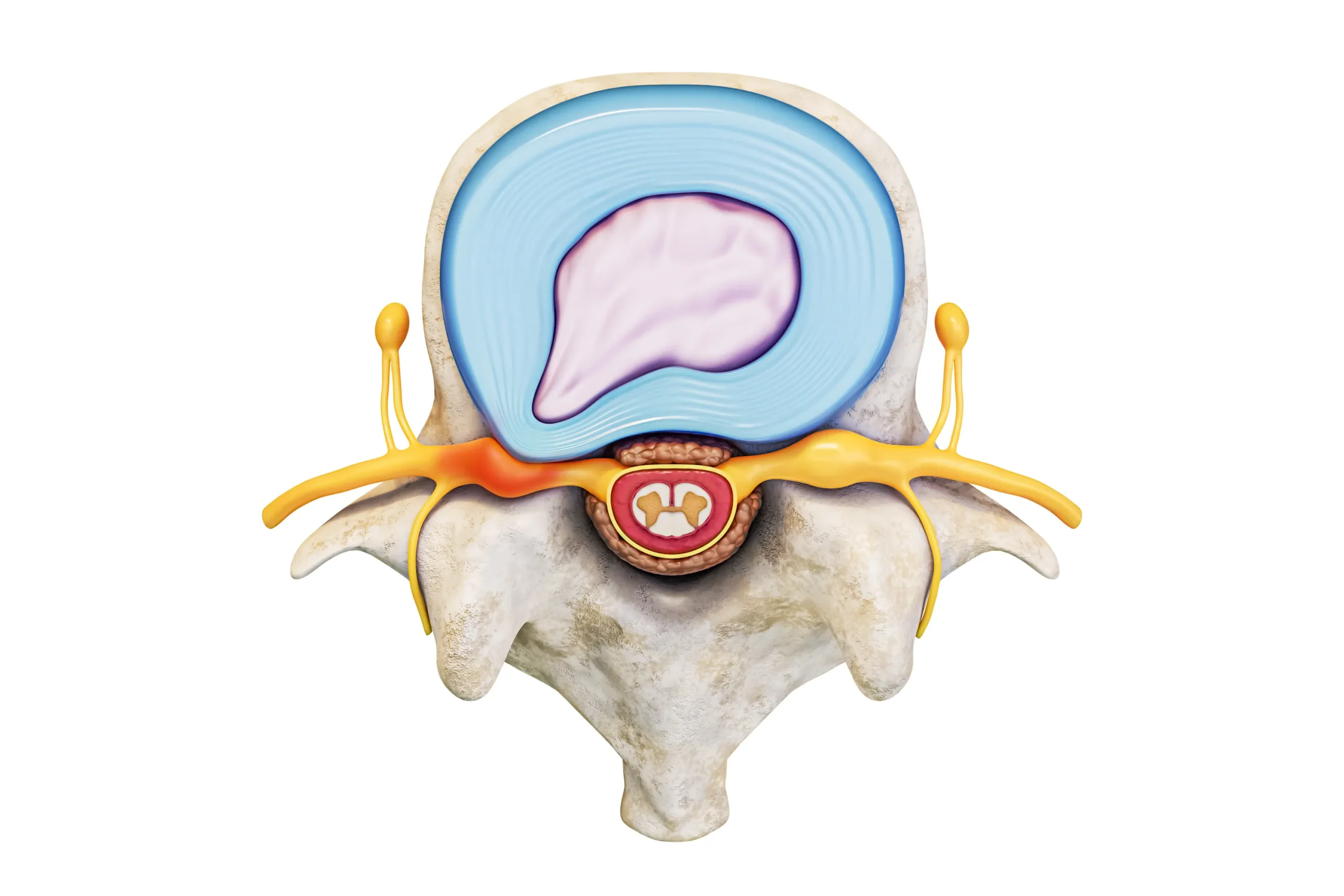
A herniated disc occurs when the soft, gel-like substance in the middle of the disc breaks through the inner aspect of the disc and protrudes out, usually through the back wall of the disc. This bulging out can pinch the nearby spinal nerves, leading to inflammation and excruciating pain that might even radiate down your leg or arm.
Even when the disc doesn’t affect the nerves, it is infamous for causing sharp and intense pain in the lower back, affecting your ability to move, especially standing upright, and interfering with your overall quality of life. For some, the pain is so unbearable that it hampers even the simplest daily tasks, like sitting, moving, or lying down to sleep.
There is good news, however: you can manage your symptoms, particularly with help from our multidisciplinary team.

Effective Solutions for Herniated Disc
At your first visit, we’ll begin by performing a comprehensive assessment, including a medical history and physical examination. Afterward, our team will design a personalized treatment plan specifically for your unique situation that may include the following:
- Chiropractic Care: Spinal adjustments can help improve range of motion in the spine, reducing stiffness and pain.
- Flexion-Distraction/Decompression Therapy: Mechanical tractions therapies geared towards unloading and relieving pressure on a herniated disc and/or pinched nerve root.
- Physical Therapy: Manual therapy and neural mobilization techniques to ease muscle and nerve tension, reducing spasm and radiating pain. Targeted stretches and mobility activities to improve flexibility and range of motion.
- Core Conditioning: Therapeutic exercises like planks and bridges can help stabilize the spine and facilitate proper technique when performing movements like squatting or lifting activities.
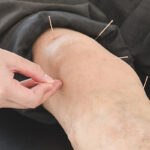
- Acupuncture Therapy: Chinese medicine can help reduce intense pain and muscle spasms associated with a herniated disc, often accelerating recovery time.
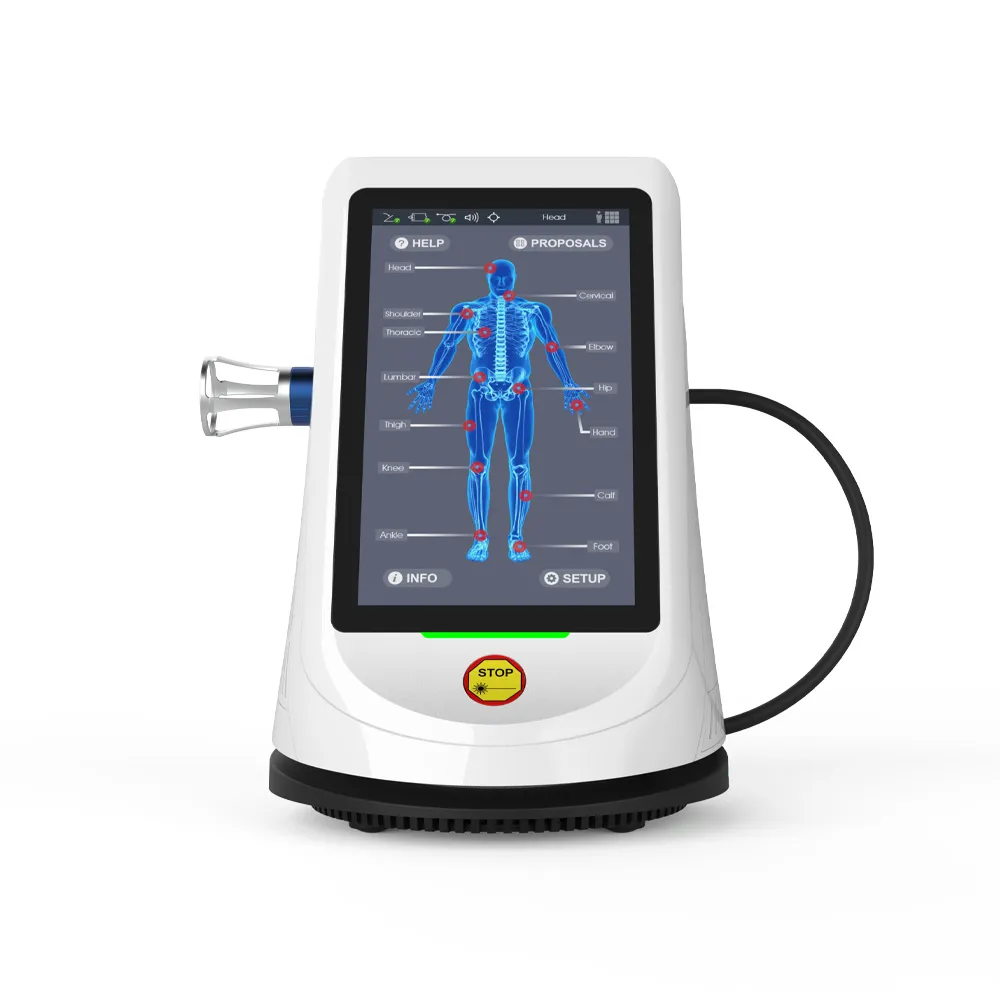
- Class IV Laser Therapy {NEW at REHABILITY NJ!}: High powered light energy penetrates soft tissues of the spine, stimulating an anti-inflammatory effect and suppresses nerve signals that transmit pain to the brain.
Understanding the condition and proper management is crucial for a positive outcome. Our team often educates the patient about body mechanics, lifestyle changes, and long-term exercise strategies to help prevent future episodes. We know that your first step to recovery starts with understanding.
NEW at REHABILITY NJ: The Power of Class IV Laser Therapy
FDS-cleared Class IV laser therapy utilizes infra-red electro-magnetic energy. When the laser light source is placed against your skin, photons penetrate several centimeters down and are absorbed by the mitochondria (the energy producing part of a cell). Simply put, healing is only possible with the regeneration of cellular energy. High powered light energy accelerates the process, in addition to suppressing pain signals and decreasing inflammation.
Class IV laser therapy is extremely safe, non-invasive and all that is usually felt is a mild warming sensation. It penetrates nearly 5x faster and deeper than Class III or cold laser, only taking a matter of minutes to get the maximum effect. While it is not uncommon to feel an immediate sense of relief depending on condition and severity, treatments are generally recommended 2-3x/week from 4-6 weeks, for cumulative improvement and optimal results.
Why Wait?
Call REHABILITY NJ today for a comprehensive evaluation and learn the steps you can actively take to recover from a herniated disc and guard against future occurrences. Schedule your appointment today to get started!
Exercise Of The Month
Bridging
Begin on your back. Bend your knees and keep your back flat on the ground. Gently, contract your abdominals and hold to keep your back flat as you move up into the bridge position. Remember to breathe. Gently, squeeze your butt muscles and lift your hips off the ground. The goal is to have your hips aligned with your knees and shoulders. Hold for 5 seconds. 3 Sets, 10 Reps.
You Could Be Our Next Success Story!
“Without the help and kindness of Dr. C and the entire REHABILITY NJ staff, I would not be walking today. 2 herniated discs and neuropathy in both feet brought me to REHABILITY NJ a couple of years ago and now I can proudly say I walk a mile a day, with joy and strength. Thanks again folks!” -Shelagh R.
“The personal attention received from the kind and friendly staff at REHABILITY NJ goes far above and beyond. My overall quality of life is so much better thanks to the comprehensive care received from REHABILITY NJ. Thank you!” -Stephanie S.





Recipe of the Month: Blender Banana Spinach Muffins

Ingredients:
- 2 eggs
- 2 medium to large extra ripe bananas (with LOTS of brown spots)
- ¼ cup pure maple syrup or honey
- ⅓ cup dairy free milk of choice
- 3 cups fresh spinach
- 1 teaspoon vanilla extract
- 1 cup packed blanched almond flour
- 1 cup oat flour, gluten free if desired
- ¼ cup flaxseed meal
- 1 teaspoon cinnamon
- 1 teaspoon baking powder
- ½ teaspoon baking soda
- ¼ teaspoon salt
- Optional: 2 tablespoons hemp seeds
Instructions:
- Preheat the oven to 375 degrees F. Line a muffin tin with 10 muffin liners (we’re only making 10 muffins). Spray the inside of the muffin liners with nonstick cooking spray so the muffins do not stick to the liners.
- Add the eggs, bananas, maple syrup/honey, dairy free milk, spinach and vanilla extract to a large, high powered blender and blend on high for 1 minute or until completely smooth. Set aside.
- In a large bowl whisk together the almond flour, oat flour, flaxseed meal, cinnamon, baking powder, baking soda and salt until well combined. Pour the blended wet ingredients over the dry ingredients and mix with a wooden spoon until well combined. Feel free to stir in hemp hearts, if using. Divide the batter between the muffin liners.
- Bake for 20-25 minutes or until a toothpick comes out clean or with just a few crumbs attached.