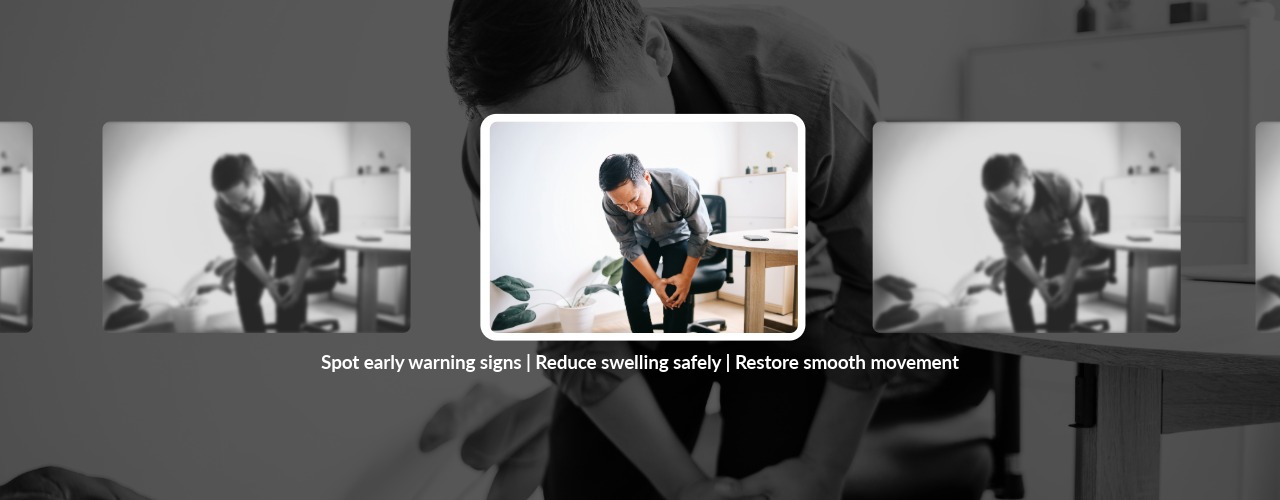
Angela (not her real name) is a 55-year-old teacher who spends much of her day standing, walking between classrooms, and kneeling to help students. Over time, she began feeling a dull ache at the front of her knee. She assumed it was normal fatigue from long workdays. But after a week, she noticed a soft puffiness just below her kneecap, along with increasing tenderness when she knelt. These subtle changes were early knee bursitis symptoms, though she did not recognize them at the time.
Early Clues That Something Was Wrong
Angela tried to ignore the discomfort by adjusting how she moved. She shifted weight to the opposite leg, avoided kneeling, and took more breaks. But the swelling became more noticeable, and the tenderness grew sharper whenever she bent the knee too far. Getting up from the floor became harder, and climbing stairs required extra effort. The knee felt stiff after sitting, and she described a warm sensation around the swollen area. When simple activities became frustrating, she scheduled a visit at REHABILITY NJ to learn what was happening.
How a Physical Therapy Evaluation Revealed the Root Problem
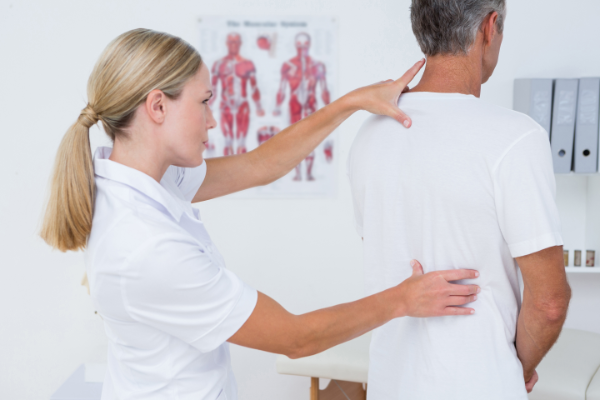
During her evaluation, the physical therapist listened to Angela’s concerns and asked about her daily routine. They examined her knee mobility, strength around the hip and thigh, and the amount of swelling near the patellar tendon. The therapist explained that bursitis develops when the small fluid-filled sacs that cushion the knee become irritated from pressure or repetitive movement. Angela’s frequent kneeling and long periods on her feet had contributed to inflammation in the bursa at the front of her knee.
The therapist also found:
- Tight quadriceps that increased pressure on the front of the knee
- Weak hip muscles that affected how her leg aligned during walking
- Tenderness around the prepatellar bursa
- Reduced flexibility in her hamstrings
These factors combined to create the knee bursitis symptoms Angela was experiencing.
Why Swelling Changes How the Knee Moves
The therapist explained that even mild swelling can interrupt normal muscle activation. When the bursa becomes inflamed, it alters how the quadriceps fire during movement. This makes the knee feel unstable or slow to respond. Angela realized that the stiffness she felt after sitting was not just soreness but a sign that her knee needed specific attention. Understanding this connection helped her see why her symptoms persisted despite rest.
Creating a Plan That Fit Angela’s Lifestyle
The therapist built a plan tailored to Angela’s activity level and goals. The first step focused on calming irritation and improving joint mobility. Gentle stretching, controlled bending and straightening, and soft tissue techniques around the quadriceps and lower leg reduced discomfort. The therapist guided Angela through movements that promoted circulation without stressing the irritated bursa.
As swelling decreased, they progressed to exercises that strengthened the hips and thighs. Improving hip control helped Angela avoid inward knee collapse during walking and stair climbing. This change reduced stress on the front of her knee and supported long-term healing.
Improving Soft Tissue Flexibility for Better Knee Mechanics
Tight thigh muscles were adding pressure to the irritated bursa. Soft tissue work helped relax the quadriceps and improve flexibility, allowing the knee to bend more comfortably. Stretching routines became part of Angela’s daily schedule. As her tissues loosened, she noticed that bending, kneeling, and squatting felt smoother and easier.
Learning New Strategies for Everyday Activity
To prevent symptoms from returning, the therapist taught Angela small changes she could use throughout her workday. These included placing padding under her knee if she needed to kneel, using better lifting mechanics, and alternating positions frequently. These adjustments reduced her knee bursitis symptoms while supporting the improvements she made in therapy.
Building Confidence through Steady Progress
Angela began noticing positive changes within a few weeks. Swelling decreased, the warm sensation faded, and her knee felt more reliable during movement. She could kneel briefly with far less discomfort and climb stairs without wincing. By strengthening the right muscles and learning healthier movement patterns, Angela gained confidence in her knee again. She felt more in control and less worried about flare-ups.
Understanding When Knee Pain Deserves Attention
Through her experience, Angela learned that early knee bursitis symptoms should not be ignored. Even mild swelling or tenderness can signal irritation that responds best to early physical therapy care. Addressing these signs quickly prevents long-term inflammation and reduces the risk of compensations that lead to further problems.
Find Targeted Knee Relief at REHABILITY NJ
At REHABILITY NJ, physical therapists help adults recognize early knee bursitis symptoms and create personalized plans that restore comfort and mobility. Our approach focuses on reducing inflammation, improving movement, and strengthening the muscles that protect the knee. If your knee feels swollen, stiff, or tender, contact REHABILITY NJ today to begin a guided, effective recovery plan.